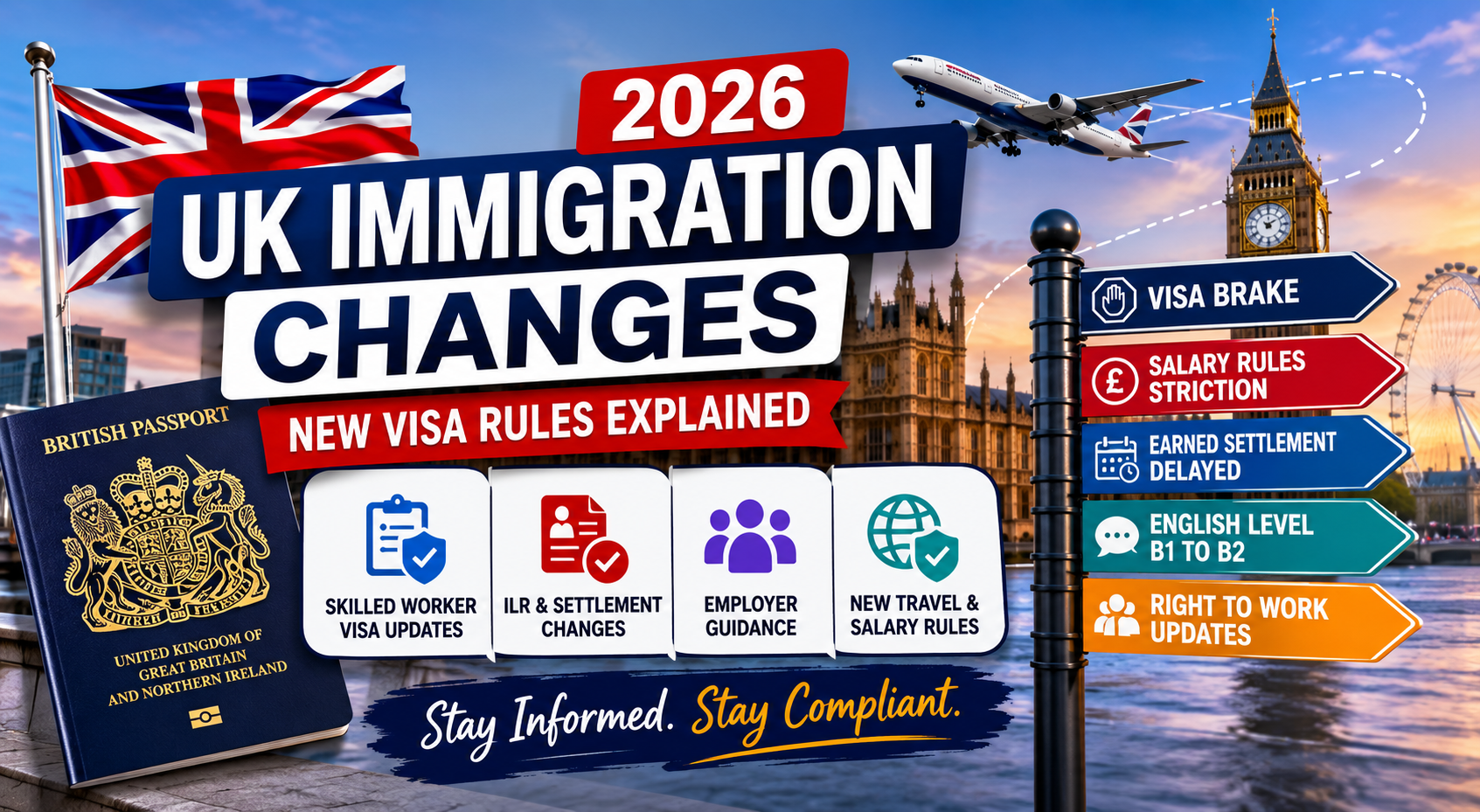

The UK immigration system has undergone major changes in 2026, affecting Skilled Worker visas, Student visas, settlement applications (ILR), sponsor licence holders, asylum seekers, and employers across the UK.
Following the government’s immigration reform agenda outlined in the 2025 White Paper, several new immigration policies have already come into force, while additional changes are expected later in 2026 and 2027. For migrants, sponsors, and businesses, staying informed is essential to avoid visa refusals, compliance breaches, and delays.
For the latest official immigration guidance, visit the UK Government’s immigration portal: https://www.gov.uk/browse/visas-immigration
Table of Contents
- The New UK Visa Brake Mechanism
- Pre-Departure Immigration Checks
- Skilled Worker Visa Salary Changes
- Earned Settlement and ILR Updates
- Higher English Language Requirements
- Changes to Asylum Seeker Work Rights
- Right to Work Checks for Employers
- What You Should Do Now
- Frequently Asked Questions
1. The New UK Visa Brake Mechanism
One of the most significant UK immigration reforms in 2026 is the introduction of the “Visa Brake” mechanism.
Since 26 March 2026, nationals of Afghanistan, Cameroon, Myanmar, and Sudan have been unable to submit new applications under the Skilled Worker visa route or the Student visa route.
This policy represents a major shift in UK immigration control because it prevents certain applications from being submitted rather than simply increasing refusal rates.
What This Means for Employers and Applicants
- UK employers recruiting overseas workers must reassess hiring plans.
- International students from affected countries may need alternative immigration options.
- Immigration advisers expect the Visa Brake mechanism could be expanded to additional nationalities in the future.
Individuals affected by these restrictions should seek professional immigration advice as early as possible to explore alternative routes.
2. New Pre-Departure Immigration Status Checks
From 25 February 2026, airlines and transport carriers are required to verify a passenger’s immigration status before boarding.
If Home Office systems cannot confirm that a traveller’s visa or immigration permission is linked correctly to their passport, boarding may be refused.
This change strengthens the UK’s digital immigration system and places greater responsibility on visa holders to ensure their records are accurate before travelling.
Key Action for Visa Holders
Before travelling to the UK:
- Verify that your eVisa and immigration status are linked to your current passport.
- Check all personal details are accurate.
- Resolve any discrepancies with the Home Office before departure.

3. Skilled Worker Visa Salary Changes Become Stricter
Employers sponsoring overseas workers should pay close attention to the Skilled Worker salary changes introduced on 8 April 2026.
Previously, salary compliance could be assessed using annual averages. Under the new rules, sponsored workers must receive the required salary threshold during each individual pay period.
Impact on Sponsor Licence Holders
The changes mean:
- Monthly salary underpayments may trigger compliance action.
- Sponsor licence holders face increased scrutiny from UKVI.
- Payroll systems must be monitored more carefully.
- Failure to meet salary requirements could result in sponsor licence suspension or revocation.
Businesses employing overseas workers should review their obligations under the Skilled Worker Visa route.
4. Earned Settlement Reform Delayed Until Late 2026
The proposed Earned Settlement reforms, which would change the route to Indefinite Leave to Remain (ILR), have been postponed until at least October 2026.
The delay follows extensive consultation responses and parliamentary debate regarding the future of UK settlement rules.
Although the current ILR requirements remain unchanged, migrants should continue monitoring developments closely.
Recommendations for ILR Applicants
- Apply for Indefinite Leave to Remain as soon as eligibility is achieved.
- Review immigration plans before potential reforms take effect.
- Seek professional immigration advice if approaching settlement eligibility.
Applicants considering settlement should review the current requirements for Indefinite Leave to Remain (ILR).
5. Higher English Language Requirements for Settlement
The UK government has announced plans to increase English language requirements for certain settlement and long-term visa routes from B1 to B2 level beginning in March 2027.
The B2 standard requires stronger communication skills, including the ability to understand complex information and engage confidently in professional and social situations.
Preparing for Future ILR Applications
Applicants planning to settle permanently in the UK should:
- Begin English language preparation early.
- Schedule approved language tests well in advance.
- Review future eligibility requirements before submitting applications.
Those pursuing settlement through family or work routes should start preparing now to avoid delays later.
6. Changes to Asylum Seeker Employment Rights
From March 2026, eligible asylum seekers can access a broader range of professional occupations listed under Appendix Skilled Occupations at RQF Level 6 and above.
These roles include:
- Software developers
- Engineers
- Teachers
- Human Resources professionals
- Veterinary surgeons
However, these expanded work rights are accompanied by broader reforms to asylum and humanitarian protection routes.
Applicants seeking work-related immigration options may also benefit from understanding the requirements of the Skilled Worker route and other employment-based visa categories.
7. Right to Work Checks: Updated Employer Guidance
In April 2026, UK Visas and Immigration (UKVI) published guidance suggesting wider Right to Work obligations for some non-traditional working arrangements.
However, revised guidance released in May 2026 clarified that statutory Right to Work checks continue to apply only to employees rather than genuinely self-employed contractors.
Employer Compliance Checklist
Businesses should:
- Review Right to Work procedures.
- Update onboarding policies.
- Train HR teams on the latest guidance.
- Maintain accurate immigration compliance records.
Companies employing overseas workers should regularly review their Sponsor Licence compliance procedures to minimise risk.
What Should You Do Now?
Whether you are applying for a UK visa, sponsoring overseas workers, or preparing for settlement, taking proactive steps is essential.
Immediate Actions
✓ Verify immigration status before travelling.
✓ Review Skilled Worker salary compliance.
✓ Monitor changes to ILR and Earned Settlement rules.
✓ Prepare for future B2 English language requirements.
✓ Seek legal advice if affected by the Visa Brake restrictions.
✓ Update employer Right to Work procedures.
If you require tailored advice regarding UK visas, settlement applications, sponsor licences, or business immigration matters, explore our UK Immigration Services.
Frequently Asked Questions
What are the biggest UK immigration changes in 2026?
The most significant changes include the introduction of the Visa Brake mechanism, stricter Skilled Worker salary compliance rules, expanded pre-departure uk immigration checks, and proposed reforms to settlement and English language requirements.
Have Skilled Worker Visa requirements changed in 2026?
Yes. From April 2026, salary compliance is assessed during each pay period rather than on an annual average basis, increasing compliance obligations for sponsors.
Has Indefinite Leave to Remain (ILR) changed?
The proposed Earned Settlement reforms have been delayed until at least October 2026. Current ILR requirements remain in place for now.
What English level is required for UK settlement?
Currently, many settlement routes require B1 English. However, the government plans to increase this requirement to B2 for certain routes from March 2027.
Do employers need to carry out Right to Work checks on contractors?
Current UKVI guidance confirms that statutory Right to Work checks apply to employees rather than genuinely self-employed contractors.
What is a Sponsor Licence?
A Sponsor Licence allows UK employers to legally sponsor overseas workers under immigration routes such as the Skilled Worker Visa.
Should I apply for settlement before the rules change?
If you are already eligible for ILR, applying sooner may help you avoid potential future changes to settlement requirements.
